
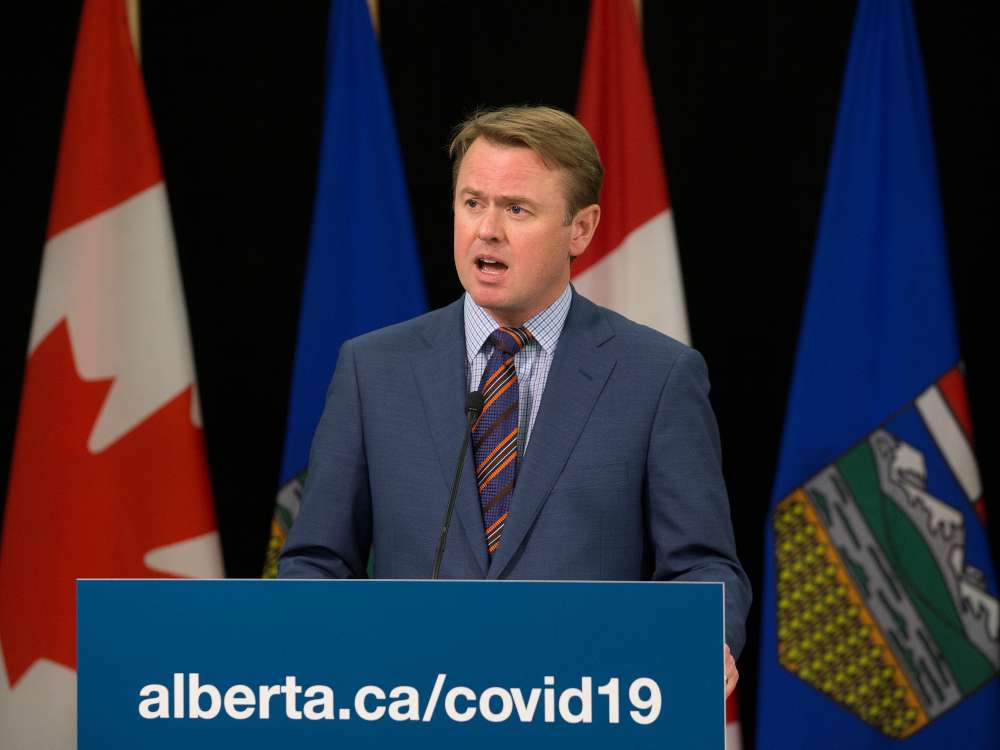
The legislation, which was rushed through the legislature in less than 48 hours, gives cabinet ministers new power to write de facto laws and create new penalties without the approval of the legislative assembly
By John Carpay
Special to The National Post
As though following Machiavellian advice to never let a crisis go to waste, the Alberta government has quietly expanded its own powers under the Public Health Act. Bill 10, which was rushed through the legislature in less than 48 hours, gives cabinet ministers new powers to write de facto laws and create new penalties without the approval of the legislative assembly.
Before Bill 10 became law on April 2, Alberta’s Public Health Act already empowered politicians and bureaucrats to take property away from citizens and organizations, to force Continued on next page Continued from previous page citizens to render aid, to conscript people to help deal with an emergency and to enter into any building or property without a warrant. The chief medical officer was already empowered to forcibly quarantine any person who is ill, or any person who is caring for a sick family member.
Before Bill 10, cabinet ministers were already empowered to suspend the operation of provincial laws, in whole or in part, once cabinet declared a public health emergency. But now, cabinet ministers have acquired the additional power of creating and implementing new orders and penalties, simply through ministerial order, without them being discussed, scrutinized, debated or approved by the legislative assembly of Alberta.
Bill 10 has also increased the maximum penalty for disobeying the Public Health Act from $2,000 to $100,000 for a first offence, and from $5,000 to $500,000 for a subsequent offence.
The only justification provided by Health Minister Tyler Shandro for these new powers was to “strengthen our ability to protect the health and safety of Albertans.” Why ministers need the power to write laws on the fly was not explained.
Without review or approval of the legislature, a minister can now create a new order requiring people to install tracking devices on their cellphones, and requiring them to register their phones with the government. Without any oversight, a minister can create an exclusive list of people who are legally permitted to go outside, or legally authorized to drive a vehicle, and impose a $1,000 fine on those who walk outside or drive “illegally” because they are not on the list. The health minister could unilaterally declare that all sick people must be forcibly removed from their homes, as the World Health Organization has suggested. And an order could be issued for mass vaccination, without any discussion or debate in the legislature.
Cabinet’s powers to suspend laws and create new laws without input or approval from the legislature will eventually come to an end, after the government decides that the public health emergency has ceased. The Public Health Act refers to a 30-day period for a public health emergency, but nothing in the legislation stops the cabinet from declaring another public health emergency the day after the first one expires. Practically speaking, the provincial cabinet, on the advice of the chief medical officer, could maintain a public health emergency for months or even years.
With courts currently closed, or highly restricted to criminal law and some family law matters, the usual checks and balances on our system of government are limited or non-existent. Thankfully, the ministers’ new ability to write laws and create new offences excludes the power to tax and spend, and newly created offences cannot have a retroactive effect.
However, Bill 10 is still an affront to the rule of law, one of Canada’s foundational principles. “Whereas Canada is founded upon principles that recognize the supremacy of God and the rule of law” are the first words in the Canadian Charter of Rights and Freedoms. The rule of law means being governed by laws, not by the whims of a king or a cabinet minister.
During this pandemic, we should accept reasonable restrictions on our charter freedoms on a temporary basis, with defined time limits and clearly explained justifications. Yet Alberta’s legislation provides no assurance that the violations of our rights will be only temporary, and no specific justification for Bill 10 has been provided.
John Carpay is president of the Justice Centre for Constitutional Freedoms.